Showing posts with label Digital Citizenship. Show all posts

Thursday, March 13, 2014

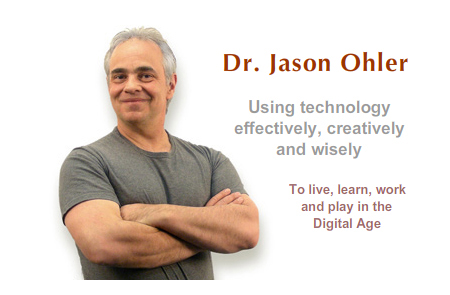
Jason Ohler at Graded

  • Do you worry about your child's digital footprint? 
  • What is the role of parents in helping students manage their online lives? 
  • Should you be blocking websites to protect your child?  

Jason Ohler a world-renowned lecturer and author of the book Digital Community, Digital Citizen, For our children will it be two lives or one?, will answer these questions and many more at our parent session on Tuesday, March 18 at 19:30 in the auditorium.  If you want to find out more about Jason Ohler and his work you can access his website at www.jasonohler.com

We hope to see you there! 
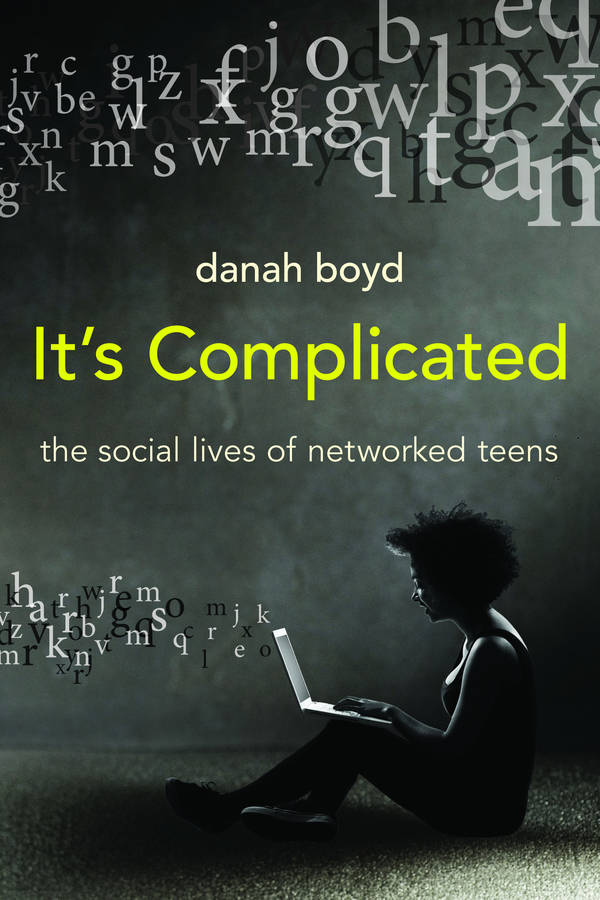
You may also be interested in reading danah boyd's book, It's Complicated: The social lives of networked teens. It's currently available as a free download. While boyd's research is on U.S. teens I think that you will find many connections to Graded students' online social lives.

Thursday, March 21, 2013

Copyright and Fair Use legal standards should be changed to allow for more sampling and remixing of music, films, books, and other material.

Image from My Guitar Lessons
http://myguitarlessons.co.uk/resources/copyright-your-music/
The debate club members debated copyright in front of the entire high school student body last week and the ideas provide all of us with food for thought. The pro side was arguing that  "Copyright and Fair Use legal standards should be changed to allow for more sampling and remixing of music, films, books, and other material." and the argument focused on three key areas.

  • Creativity and Innovation
  • Economics
  • Ethical Issues
Below are a few key points from each side.

Pro
  • "the slowness of change by the older generation.  They are comfortable with books and magazines that borrow from other books and magazine as long as they put quote marks around it and only a few thousand people read it.  Our generation is used to digital media that doesn’t have quote marks, and even if we do attribute where media we sample, we run the risk of fines and prosecution.  The laws of today regarding copyright and fair use need to catch up to the realities of the 21st century."
  • The Wall Street Journal said it best in 2008 when it wrote: “[remixing] could inspire a deeper, much more meaningful practice of learning for a generation that has no time to read a book, but spends scores of hours each week listening, or watching or creating, "media."
    … We need to restore a copyright law that leaves "amateur creativity" free from regulation… Digital technologies have democratized the ability to create and re-create the culture around us. Where the creativity is an amateur remix, the law should leave it alone.
  • "Don’t you see the benefit to students, artists, and others who could use digital media produced by others in their own work.  Bestselling history books can quote other history books, so why can’t amateur or professional musicians do the same?"
  • "Unfortunately my friends on the con side don’t see the harm of rigid copyright laws. For instance did you know that showing Martin Luther King’s “ I have a dream speech” without buying the 20$ DVD( expensive for public schools) is illegal?"
  • "Furthermore $58 billion isn’t lost to the US economy because of content theft. This claim is based on a study done by the motion picture association, but , “the Government Accountability Office released a report noting that these figures “cannot be substantiated or traced back to an underlying data source or methodology,”  basically “it’s these numbers are Bs”

Con
  • " It isn’t up to the amateur remixer to decide if a work of music or film is theirs to use.  They do not own it, the original artist does."
  • "Creativity is here today, lots of people use digital media to remix.  Unless you are hoping that by changing the law a more people will be able to use the work of artists without permission..."
  • The losses to piracy are stunning.  According to US NEWS and World Report “$58 billion is annually lost by the U.S. economy due to content theft, including more than 373,000 lost American jobs."  Think of all the movies, songs, and other digital media that isn’t purchased and the harm that does to companies, investors, and especially to the artists themselves.
  • "Besides the money, I feel for the artist who works and works on their creative product and then because it can digitized and easily taken, they lose all control."
  • "Nicky you play guitar.  What if you write some music and I wanted to use some of it in one of may songs without your permission.  How would you feel about that?"
  • The German news organization Deutche Welle reported in 2010 that “three countries known for the vibrant music scenes and influential artists - Spain, France and Brazil - are suffering acutely, with local artist album sales and release volumes plummeting. In Brazil, full priced local album releases from the five largest music companies in 2008 were down 80 percent from their 2005 level
After the debate students were surveyed and here are the results. While some people may find problems with so many students supporting more relaxed copyright laws, this is our reality with teens today. Those who support changes have valid arguments based on today's digital world.


At Graded we rely on both Creative Commons and Fair Use guidelines.


Thursday, October 11, 2012

The Mind Reader and The Man Without Facebook

Earlier this week I posted the survey results showing the online habits for parents and students. Recently these two videos were shared with me and both relate to digital tattoos and online identity. The first one reminds us how vulnerable we are while the second is about being invisible online. Enjoy.


Tuesday, October 9, 2012

Digital Tattoos: Parents vs. Students

Early on in the semester we surveyed the students during a flex assembly to find out their views on their online habits. Just recently we asked parents the same questions. Here is what the groups said.
The majority in all groups are relatively cautious but 83% of the parents are "very cautious".
40% of the parents report that they are "non-existent" online and only 13% say that it is "not something I worry about" There are big discrepancies between students and parents on this item. 
Very few students and parents are concerned about cyberbullying. Most are worried about identity theft and 79% of parents are worried about this.
There is general agreement across the board that it's "manageable" to take care of online identity. 
While there is consensus that file sharing is illegal, 43% of parents are totally against the practice, while only 2% of the 11th graders and 6% of the 10th graders agree with this statement.

Finally, many students and parents feel that uploading photos is "risky"

What are you thoughts on these results? Anything that surprises you? 


Tuesday, August 14, 2012

Flex Assembly - 30 Minutes, 3 Messages

Mr. Bair and I met with students today to discuss three very different topics. Try to imagine a discussion on respect and tolerance that stemmed from racist graffiti that was found in the middle school; the Global Issues Network Conference and the story of the hummingbird; and tattoos, Mike Tyson, Shelly Dorf and Nina Bair.

Message #1 - Unfortunately, the first item focused on racist graffiti that was found on maps in the MS hallways. As a community, we need to do everything within our powers to put an end to this type of hatred. Mr. Bair's message was clear, we have an international student body and we will continue to strive for every member to to be respectful and tolerant of others. Respect and Tolerance as defined by our Core Values.


• We believe in respecting people (their integrity, sense of self-worth, individual identity).

• We believe that diversity has a positive and enriching value and should be recognized and appreciated.
• Acceptance of differences fosters solidarity, unity, and empathy.
• We respect safety and the protection of property.
• We stress respect for cultural differences and diversity.
• We respect agreed upon values as expressed by Graded as an institution and as expressed in our relations with each other in the school community.

Message #2 - Pollo Suàrez shared the story of the hummingbird (see video in presentation) and asks the group, "What's Your Drop?" He also announced that the GIN committee is looking for student volunteers for the October 12 - 14 conference.